Caring for a Diabetic Cat, One Day at a Time
Daily care can feel complicated at first. A simple routine, good records, organized supplies, and clear instructions from your veterinary team can make everyday life feel much more manageable.

The Goal Is Not Perfection. It Is a Routine You Can Follow.
Caring for a diabetic cat often means adding several new tasks to an already busy day. The easiest way to manage those tasks is to give each one a clear place in your routine.
Your veterinarian determines the medical care. At home, you can make that plan easier to follow by keeping instructions, records, supplies, and questions organized.
Give the Day a Simple Structure
Your cat's exact schedule should follow the plan from your veterinary team. These four areas can help you keep that plan organized.
Meals
Keep feeding instructions easy to find and note appetite changes or anything unusual.
Medication
Use a written log so you are not relying on memory to remember what was given and when.
Monitoring
Record the information your veterinarian has asked you to track and keep those records together.
Observations
Notice meaningful changes in appetite, behavior, drinking, litter-box habits, weight, or overall well-being.
Create One Place for Diabetic-Cat Supplies
A dedicated care area can save time and reduce the chance of hunting for something when you are tired or rushed.
It does not need to be elaborate. A drawer, cabinet, basket, or small storage area can work.
- Current veterinary instructions
- Medication and approved supplies
- Logs and tracking sheets
- Contact information for your veterinary clinic
- Reorder notes or supply reminders
- Backup-care instructions
Keep Instructions With the Supplies
When care instructions and supplies are stored together, you are less likely to depend on memory.
This is also helpful if another trusted person ever needs to care for your cat.
Keep medications and supplies stored according to the directions provided by your veterinarian, pharmacy, or manufacturer.
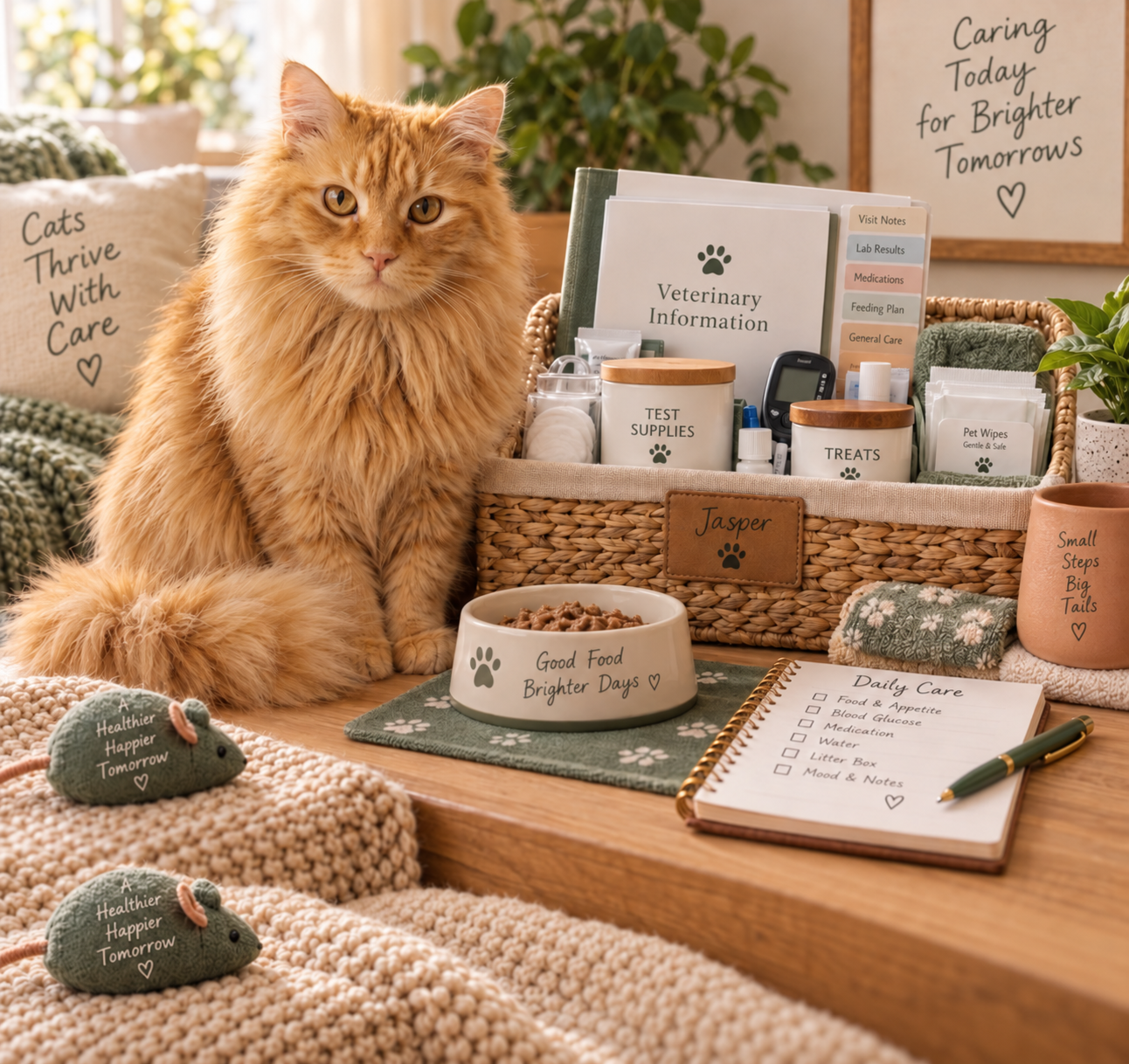
Write It Down Instead of Trying to Remember
Good records can help you stay organized and give your veterinary team useful information about what is happening at home.
Care Records
Keep meals, medication, monitoring, and daily care information in one consistent place.
Changes You Notice
Record meaningful changes instead of trying to remember exactly when something began.
Questions
Keep a running list for your next veterinary conversation so important questions do not disappear.
Know What You Have Before You Need It
Running out of an important supply at the wrong time can add unnecessary stress.
Keep a simple inventory and reorder early enough that you are not depending on the last item in the box.
Your exact supplies will depend on your cat's care plan, so confirm what you need with your veterinary team.
Your Supply Check
Do Not Guess When You Are Unsure
Real life happens. A meal may not go as expected. You may become uncertain whether medication was given. Your cat may act differently than usual.
When something affects your cat's treatment plan and you do not know what to do next, contact your veterinary team.
Unsure About Medication?
Contact your veterinary team rather than repeating, changing, or adjusting a dose on your own.
Cat Not Eating Normally?
Follow the instructions your veterinarian has given you and contact the clinic when you are unsure.
Something Seems Wrong?
If your cat seems seriously unwell, seek veterinary help promptly.
Plan for Work, Caregivers, and Time Away
A diabetic cat's routine needs to fit into real life. Planning ahead can make workdays, pet sitters, emergencies, and travel much easier to manage.
Workdays
Build your cat's veterinary care plan into a schedule you can consistently follow and discuss difficulties with your veterinary team.
Pet Sitters
Leave clear written instructions, clinic information, supplies, and emergency contacts for anyone trusted with your cat's care.
Travel or Emergencies
Have a backup plan before you need one, including who can help and where important information is stored.
Bring the Useful Information With You
Good preparation can help you make better use of the time you have with your veterinary team.
- Your current care records
- Questions you have written down
- Changes you have noticed
- Current medication information
- Feeding information
- Any monitoring information your veterinarian requested
One Small Habit That Helps
Keep one running note titled "Questions for the Vet."
Add questions when they occur to you instead of trying to remember them on appointment day.
That simple habit can make veterinary visits feel much more productive.
Make Daily Care Easier to Track
The Free Diabetic Cat Daily Care Kit gives you practical pages for keeping important information together.
Use it alongside the care plan created by your veterinary team.
Get the Free Care KitKeep Track of
- Daily care
- Medication and insulin
- Blood glucose information
- Food and weight
- Symptoms and changes
- Vet appointments
- Supplies
- Emergency information