My Cat Was Just Diagnosed With Diabetes. What Do I Do Now?
If your mind is racing, you are not alone. You do not have to understand feline diabetes all at once. Start with the next step, write things down, ask questions, and let your veterinary team help you build a care plan for your individual cat.

You Do Not Have to Learn Everything Today
A diabetes diagnosis can suddenly bring unfamiliar words, new supplies, new routines, and a lot of worry. It is easy to feel as though you need to become an expert overnight. You do not.
What you need first is a clear understanding of your veterinarian's plan for your cat, a simple way to keep track of important information, and a place to return when you need help making sense of it all.
Focus on These Three Things First
Before you try to learn everything about feline diabetes, make sure these basic pieces are in place.
Understand the Care Plan
Make sure you know what your veterinary team wants you to do each day and when they want you to contact them.
Write Everything Down
Do not depend on memory while you are learning. Keep instructions, doses, meals, monitoring, questions, and appointments together.
Learn the Routine Slowly
The first few days may feel awkward. Repetition and clear written steps can make the routine feel much more familiar.
Before You Leave the Veterinary Office
Ask your veterinary team to explain the plan in plain language. If something does not make sense, ask again.
You should know where to find the information you need when you are home and no longer standing in the exam room.
- Medication or insulin instructions
- Feeding instructions
- Monitoring instructions
- Follow-up appointment information
- What changes your veterinarian wants you to watch for
- Who to contact if you have a question or problem
- Which situations require urgent or emergency care
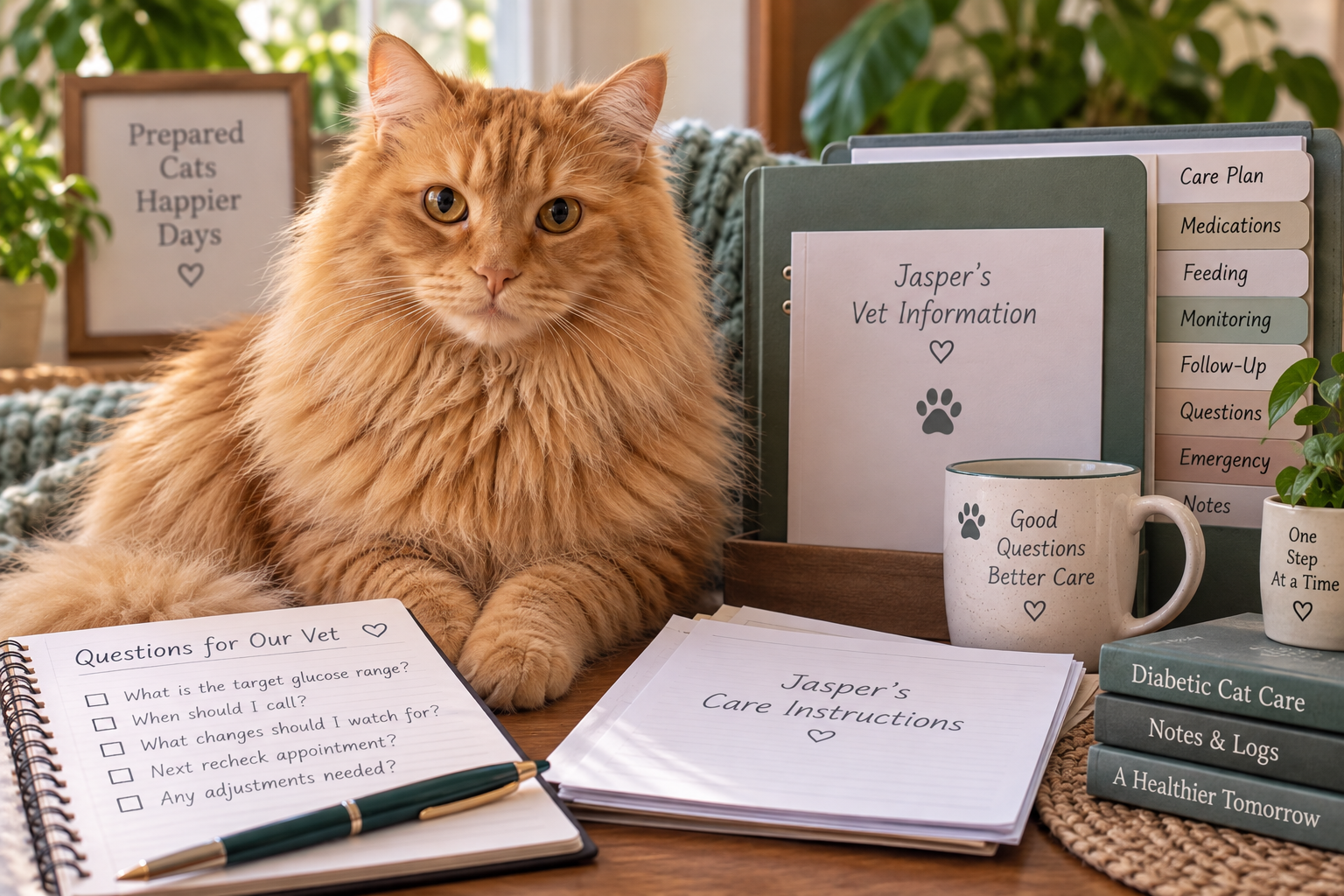
It Is Okay to Ask for Written Instructions
Stress makes it harder to remember details. Ask your veterinary team to write down the important parts of your cat's care plan or provide printed instructions.
You can also take your own notes and repeat the plan back to make sure you understood it correctly.
If something later seems unclear, call the clinic instead of guessing.
You Are Allowed to Ask a Lot of Questions
A written question list can make veterinary visits much easier, especially when everything still feels new.
A Simple Routine Can Make Everything Feel Less Chaotic
Your veterinarian will determine your cat's medical care. Your job at home is to make the routine as clear and organized as possible.
Meals
Keep feeding instructions somewhere easy to see and record anything unusual.
Medication
Use a log so you are not relying on memory when the day gets busy.
Monitoring
Record only what your veterinary team has asked you to monitor and note meaningful changes.
Questions
Keep one running list so questions do not disappear before the next veterinary conversation.
Being Nervous About Giving an Injection Is Very Common
For many people, this is one of the most frightening parts of a new diabetes diagnosis.
You may worry that you will hurt your cat, give the medication incorrectly, forget whether you gave it, or make a mistake that matters.
Ask for Hands-On Help
Ask your veterinary team to demonstrate the process, watch you practice if appropriate, and answer your questions before you are expected to feel comfortable doing it at home.
If you are ever unsure about a dose or what happened, contact your veterinary team rather than guessing.
Avoid Making Big Changes on Your Own
It is natural to begin researching food, glucose monitoring, supplements, schedules, and everything else as soon as your cat is diagnosed.
Research can be helpful, but your cat's care plan needs to be coordinated with your veterinary team.
Changes in food, medication, monitoring, or routine can affect the bigger picture, so ask before making major changes.
Information Is Not a Grade
A glucose reading, weight change, appetite change, or symptom is information your veterinary team can use.
It is not a score that tells you whether you are a good or bad caregiver.
If Something Feels Urgent
If your cat suddenly seems seriously unwell, becomes unresponsive, collapses, has a seizure, or you believe medication may have been given incorrectly, contact your veterinarian or an emergency veterinary clinic promptly.
You Do Not Have to Keep All of This in Your Head
The Free Diabetic Cat Daily Care Kit gives you practical pages for keeping important information together while you learn your cat's routine.
Use it alongside the care plan created by your veterinary team.
Get the Free Care KitThe Kit Includes
- Daily Care Log
- Blood Glucose Log
- Medication & Insulin Log
- Food & Weight Tracker
- Symptoms & Changes
- Vet Visit Planner
- Supply Checklist
- Emergency Information
What Would Help You Most Right Now?
You do not need to read everything on this website today. Choose the next thing you need.
Jasper and I Had to Learn This Too
When Jasper was diagnosed, I thought being diabetic myself meant I would immediately know how to handle it.
I quickly learned that caring for a diabetic cat was a completely different experience. I was frightened, especially about giving insulin, and I worried about doing something wrong.
Over time, the routine became more familiar. That is why The Diabetic Cat exists. To help you find clear information, practical tools, and support while you learn how to care for the cat you love.
Read Jasper's Story