Monitoring Your Diabetic Cat Without Letting the Numbers Take Over
Monitoring can give your veterinary team useful information about how your cat is doing. The goal is not to chase a perfect number. It is to notice patterns, keep good records, and know when to ask for help.
Look at More Than One Number
Your veterinarian will tell you what information is useful for your individual cat. Monitoring may include several pieces of the bigger picture.
Glucose Information
Record glucose information when and how your veterinary team has asked you to monitor it.
Appetite
Notice meaningful changes in how much and how normally your cat is eating.
Weight
Track weight when your veterinarian recommends it and report unexpected changes.
Everyday Changes
Drinking, litter-box habits, energy, behavior, and other changes can also matter.
A Reading Is One Piece of Information
It can be easy to look at a glucose reading and immediately feel worried, discouraged, or relieved.
Try to remember that one reading is part of a larger picture. Your veterinary team may consider patterns over time, your cat's symptoms, appetite, weight, and other information when evaluating the care plan.
Record the reading accurately and follow the monitoring plan your veterinarian has given you.
Do Not Adjust Medication on Your Own
A glucose result can raise questions, but medication changes should be discussed with the veterinarian managing your cat's diabetes.
If a reading concerns you or does not make sense, contact your veterinary team rather than guessing.
What Is a Glucose Curve?
A glucose curve looks at multiple glucose readings over a period of time so your veterinary team can see how glucose changes across part of the day.
More Than One Reading
A curve shows a series of readings rather than relying on one isolated result.
Look for Patterns
Your veterinarian can use the pattern together with other health and care information.
Follow the Vet's Plan
Ask your veterinary team whether a curve is needed, where it should be done, and how they want it performed.
Keep the Information in One Place
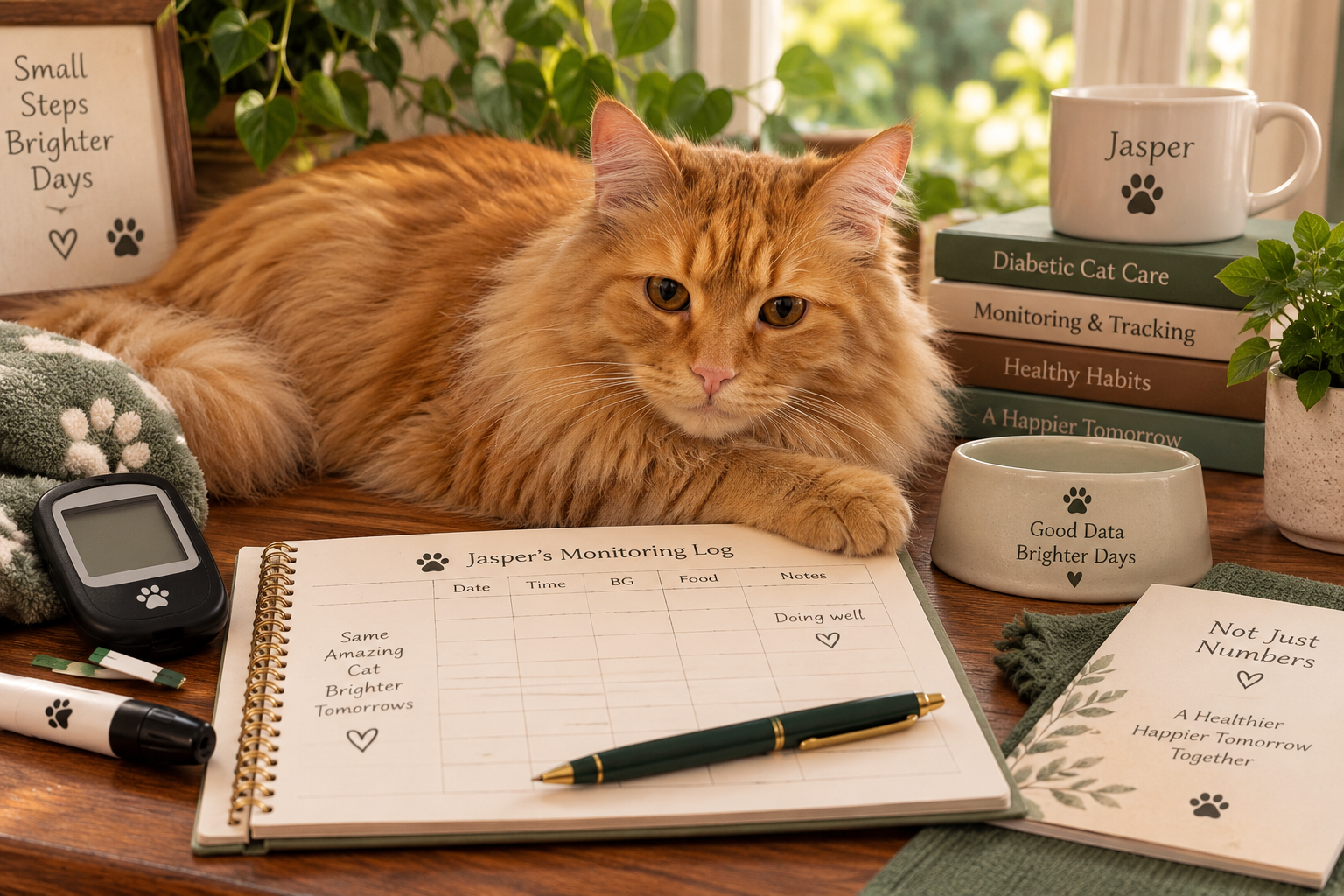
Monitoring becomes much harder when information is scattered across scraps of paper, phone notes, and memory.
Use one consistent system so you can quickly find the information your veterinarian needs.
- Date and time
- Monitoring information requested by your veterinarian
- Meals and appetite changes
- Medication information
- Weight when requested
- Symptoms or changes you notice
- Questions for the veterinary team
Ask for a Clear Plan Before You Begin
If your veterinarian wants you to monitor something at home, ask exactly what they want recorded and how they want it done.
Have them demonstrate any unfamiliar equipment or technique and make sure you know who to contact if you run into a problem.
Write the Instructions Down
Stress makes details easy to forget.
Keep written monitoring instructions near your supplies so you do not have to rely on memory.
Your Cat's Behavior Matters Too
Numbers can be useful, but they are not the only information your veterinary team may want to know.
Eating & Drinking
Note meaningful changes in appetite, thirst, or normal feeding behavior.
Litter-Box Habits
Changes in urination, stool, or litter-box behavior may be worth reporting.
Energy & Behavior
Changes in activity, comfort, interaction, or normal behavior can provide useful context.
Bring the Story, Not Just One Number
A clear record can help your veterinary team understand what has been happening between appointments.
Make Monitoring Easier to Organize
The Free Diabetic Cat Daily Care Kit includes practical pages for recording glucose information, medication, food, weight, symptoms, veterinary visits, and daily care.
Use it alongside the care plan created by your veterinary team.
Get the Free Care KitHelpful Pages Include
- Blood Glucose Log
- Daily Care Log
- Medication & Insulin Log
- Food & Weight Tracker
- Symptoms & Changes
- Vet Visit Planner